Privacy Vinyl Fence
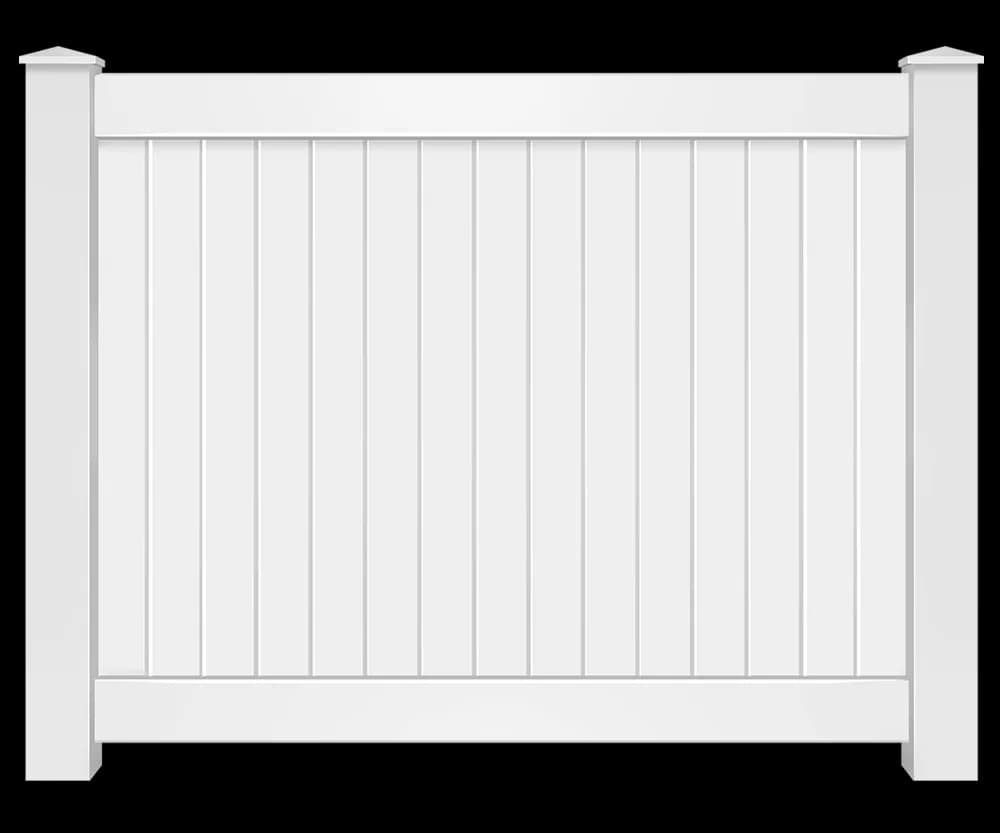
Interlocking tongue-and-groove boards form a solid panel with no gaps. It is the vinyl fence most Upstate homeowners pick for a backyard, pool, or hot tub area.
Best for: Complete backyard and pool privacy
Vinyl gives you privacy, picket, and ranch rail looks that never need paint, stain, or sanding. Stateside Fence & Deck LLC installs every style below with galvanized steel posts inside the vinyl, so your fence stays straight through Upstate heat, humidity, and storms.
A galvanized steel post runs inside every vinyl post and is set in concrete, so panels stay plumb instead of leaning after a few seasons.
A local crew you can reach by phone, with clear pricing and a written estimate before any post goes in the ground.
We measure the property line, talk through styles and heights, and give you an exact number — at no cost and with no pressure.
Vinyl is the low-maintenance answer to a wood fence. It will not rot, warp, or feed termites, it never needs staining, and a rinse with a garden hose brings the color back after a summer of pollen. For a lot of Upstate homeowners that trade-off is worth the higher price per foot.
Start with what the fence needs to do. Solid tongue-and-groove panels close the backyard in completely. Semi-private styles keep most of that screening while letting wind pass through, which matters on open lots. Picket and rail styles frame a front yard or a driveway without blocking the view.
Every style below is one we install across Greenville, Spartanburg, and the surrounding cities, in heavy-wall vinyl with galvanized steel post inserts and gates framed in aluminum so they never sag.
Not sure which one fits your yard? Tell us what you are trying to accomplish and we will recommend a style on the free on-site estimate.
Privacy, semi-private, picket, and ranch rail panels, each available in white and tan with pyramid, flat, New England, or ball post caps. Tap any style to see it full size.
Solid tongue-and-groove panels that close the yard in completely. Add a decorative topper and you keep the privacy while the fence line still reads light from the street.
Interlocking tongue-and-groove boards form a solid panel with no gaps. It is the vinyl fence most Upstate homeowners pick for a backyard, pool, or hot tub area.
Best for: Complete backyard and pool privacy
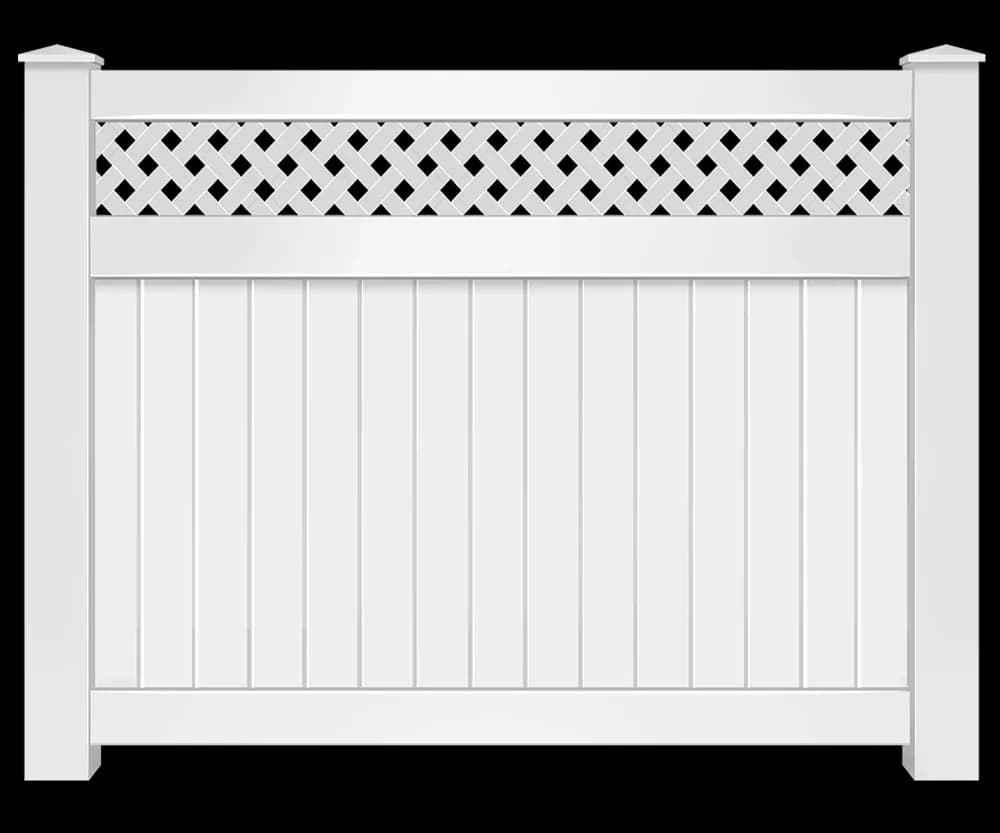
A privacy panel finished with a diagonal lattice section on top. You gain about a foot of height and a softer, more decorative line without losing screening below.
Best for: Extra height with a decorative finish
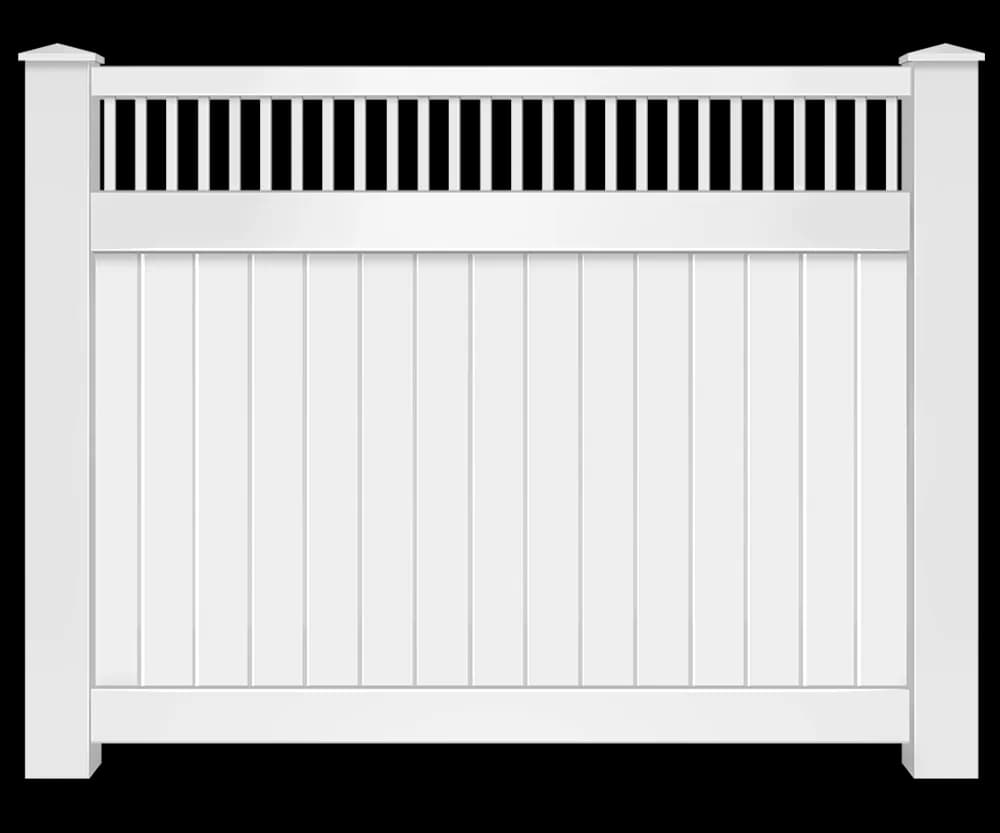
Closely spaced spindles sit above the privacy panel under a top rail, letting light through the upper section while the yard stays screened.
Best for: Privacy with a lighter top section
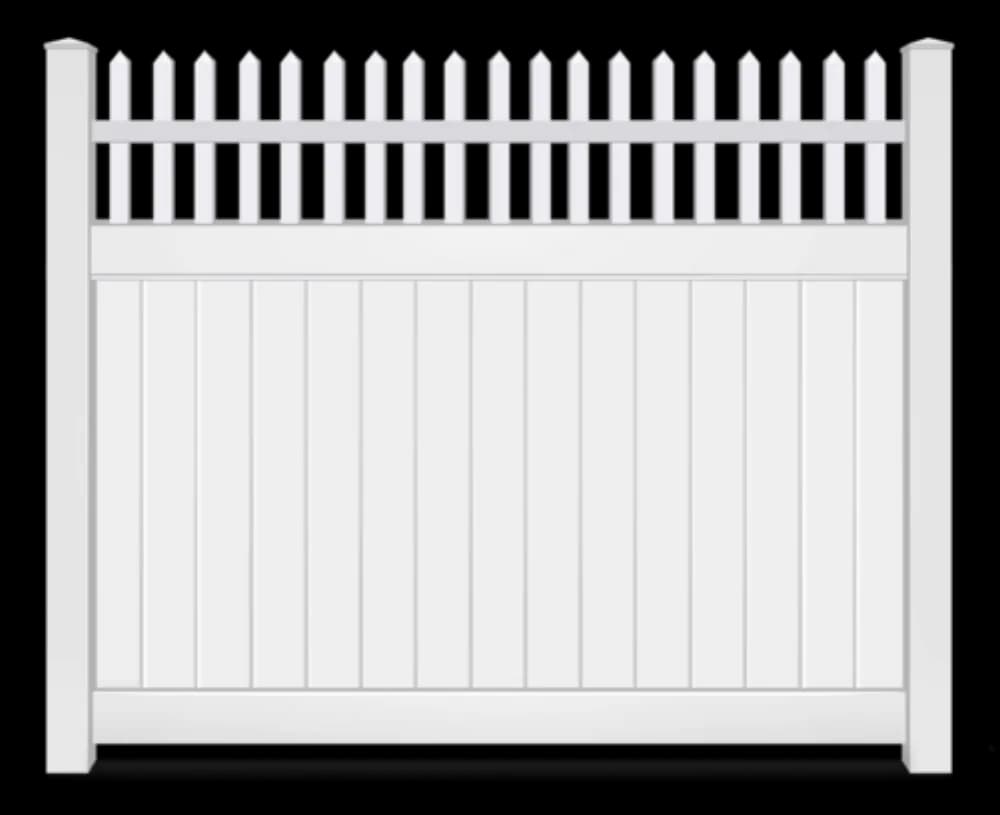
Open spindles rise above the rail with no cap board, giving the fence an airy crown and a more traditional, framed look along the top of the run.
Best for: An open, framed top over a privacy panel
Narrow, deliberate gaps between the boards. From the yard the fence still screens well, but breezes pass through and the fence line never feels like a wall.
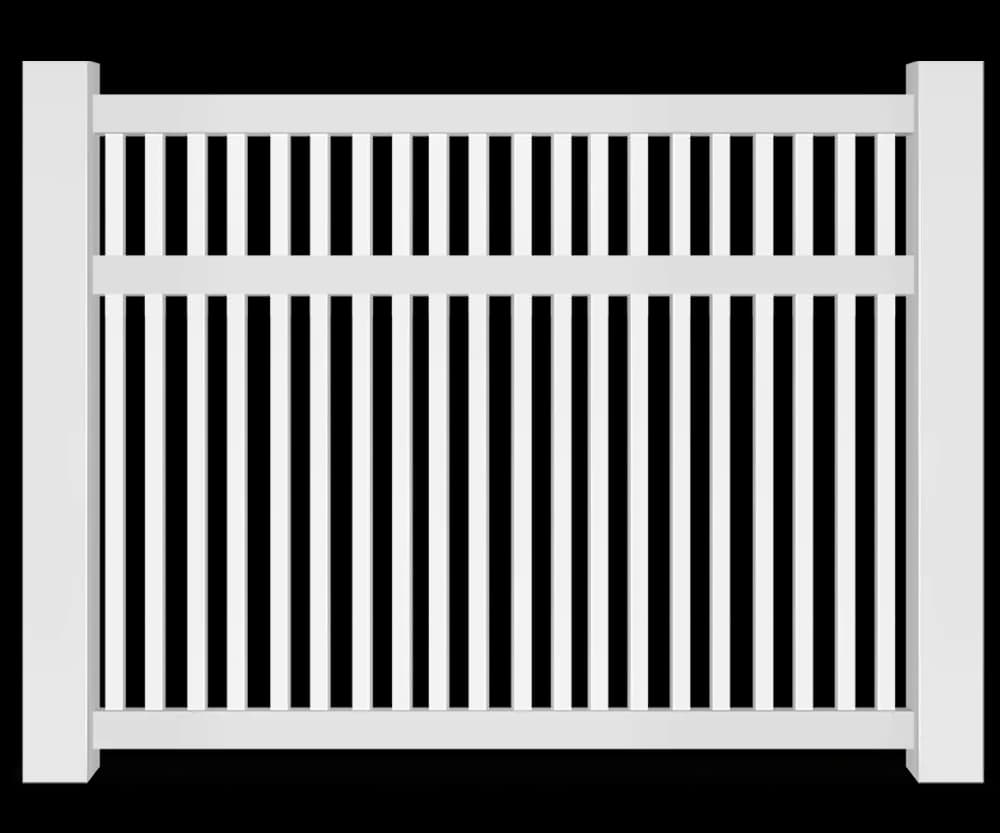
Full-height pickets set with a narrow gap between each one. You get most of the screening of a privacy fence with better airflow on an exposed or windy lot.
Best for: Windy lots and shared property lines
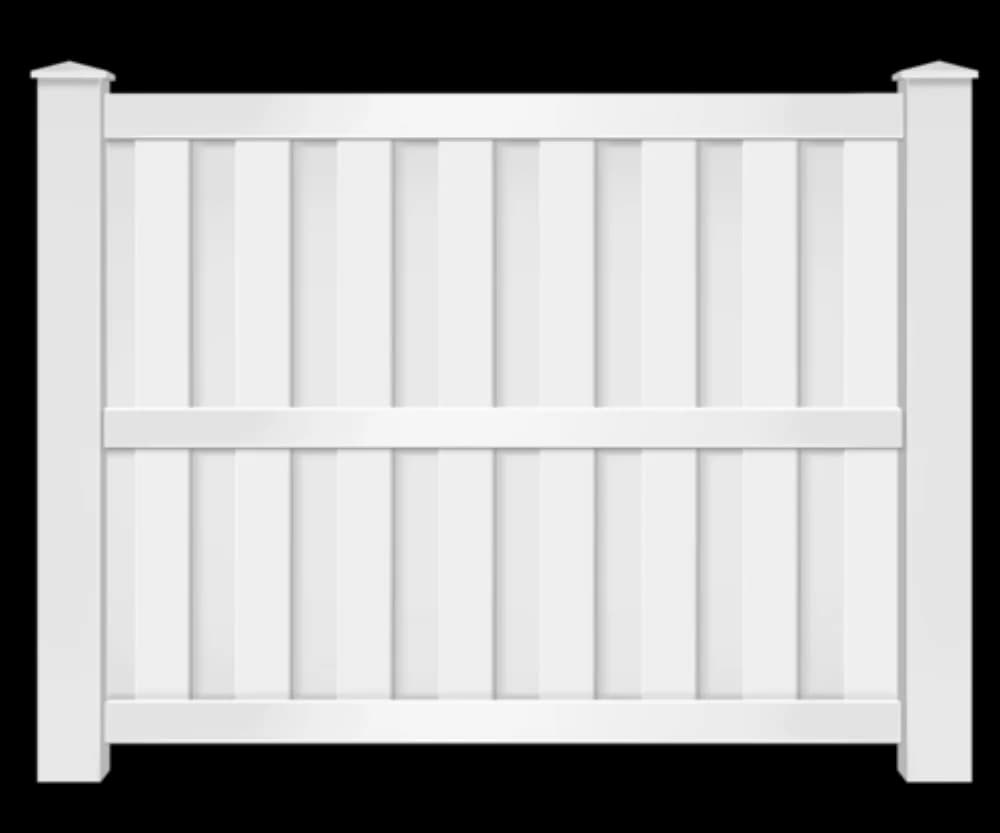
Wide boards mounted on alternating sides of the rails give the panel depth and shadow, so it looks finished from both sides of the fence line.
Best for: A two-sided fence with dimension and airflow
Open, lower fences for front yards, gardens, and pet areas — the classic white picket look that never needs a coat of paint.
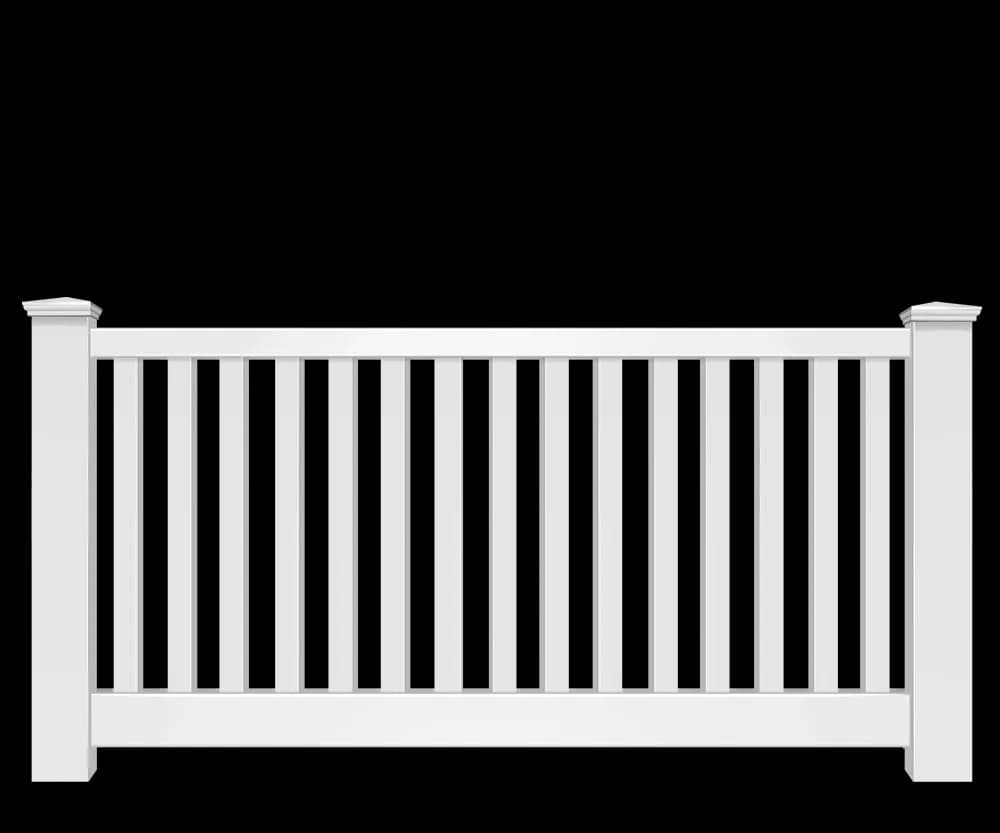
Tightly spaced pickets under a top rail. The narrow gaps keep small dogs in and children safe while the fence still feels open from the street.
Best for: Front yards with small pets or kids
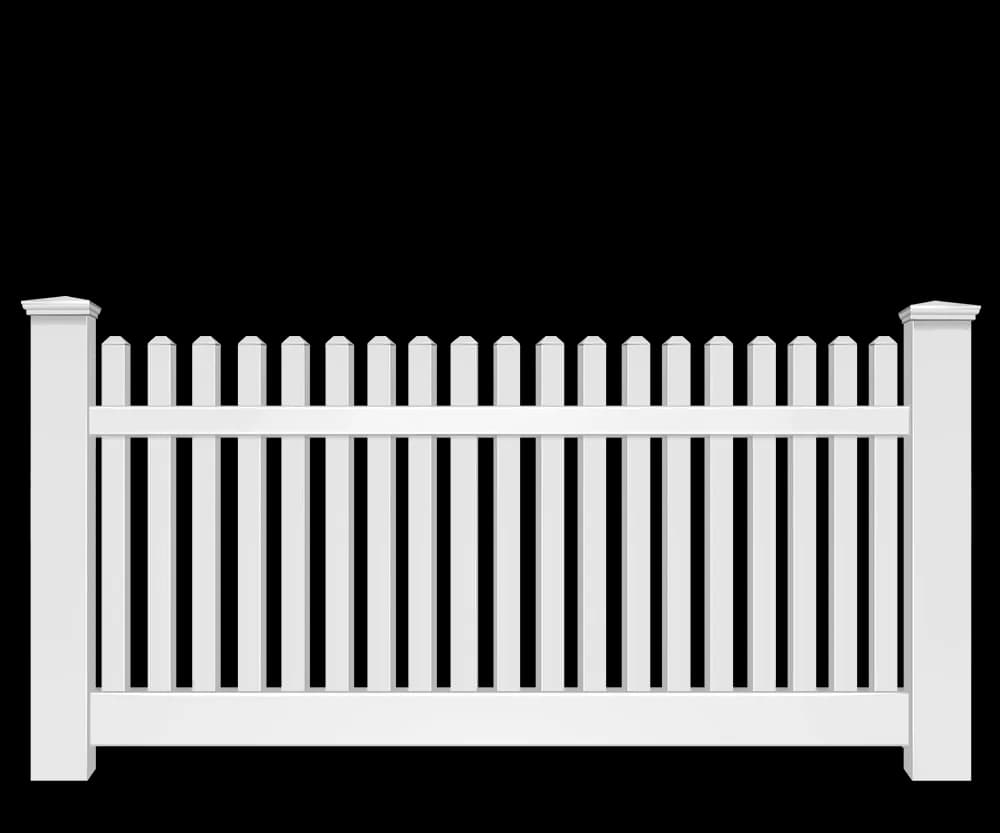
Evenly spaced pickets with wider gaps, framing the yard and garden beds without blocking the view from your porch or windows.
Best for: Decorative boundaries and garden borders
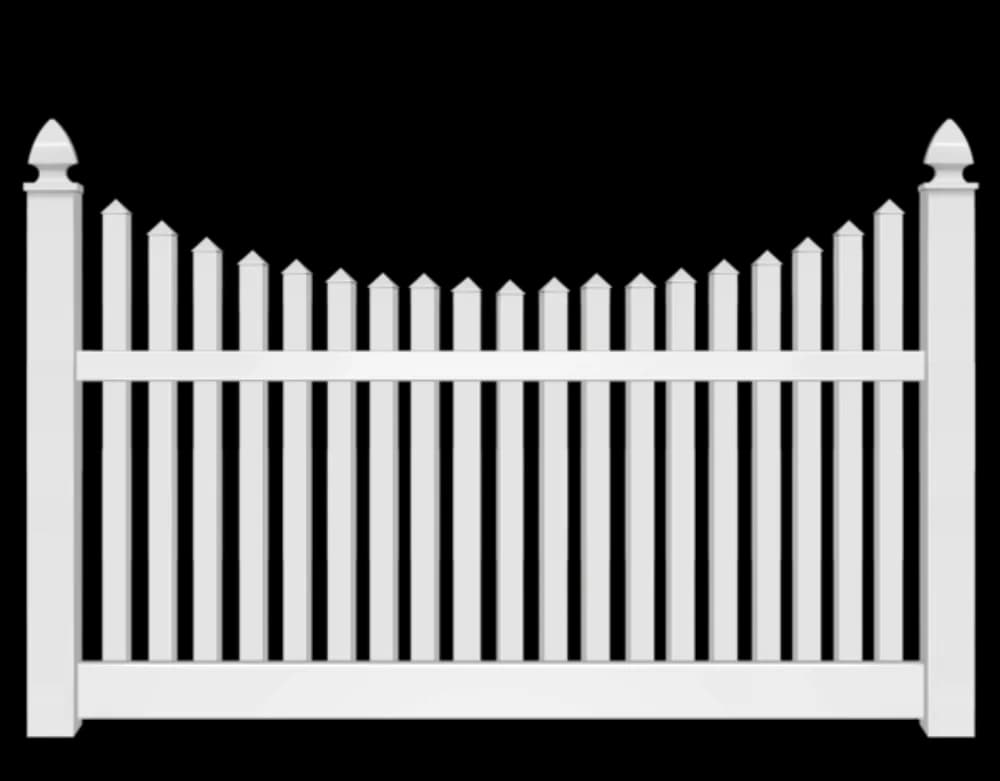
Pickets cut in a gentle curve between posts, finished with ball or New England post caps. It is the most charming option we install for a front yard.
Best for: Curb appeal on cottage and traditional homes
Long-run rail fencing for driveways, pastures, and acreage. Vinyl rail holds a straight, white line across a big property with no painting and no rotted posts.
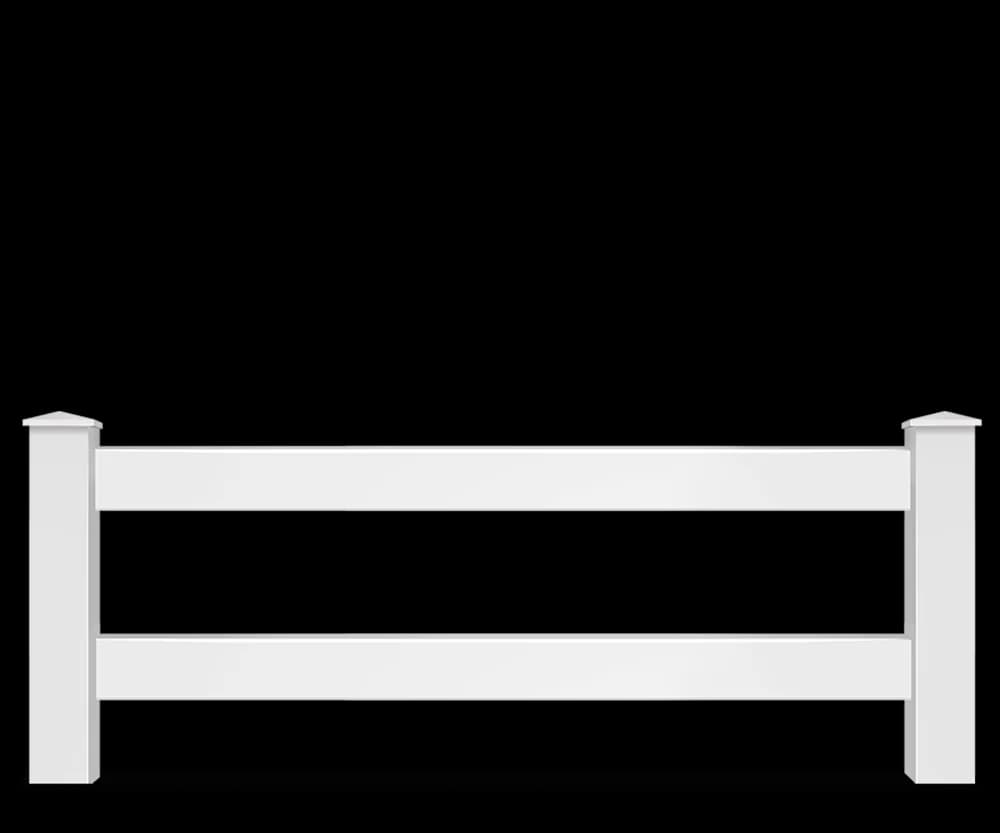
Two wide horizontal rails between posts. The most economical way to mark a boundary or line a driveway across a large Upstate property.
Best for: Driveway lines and property boundaries
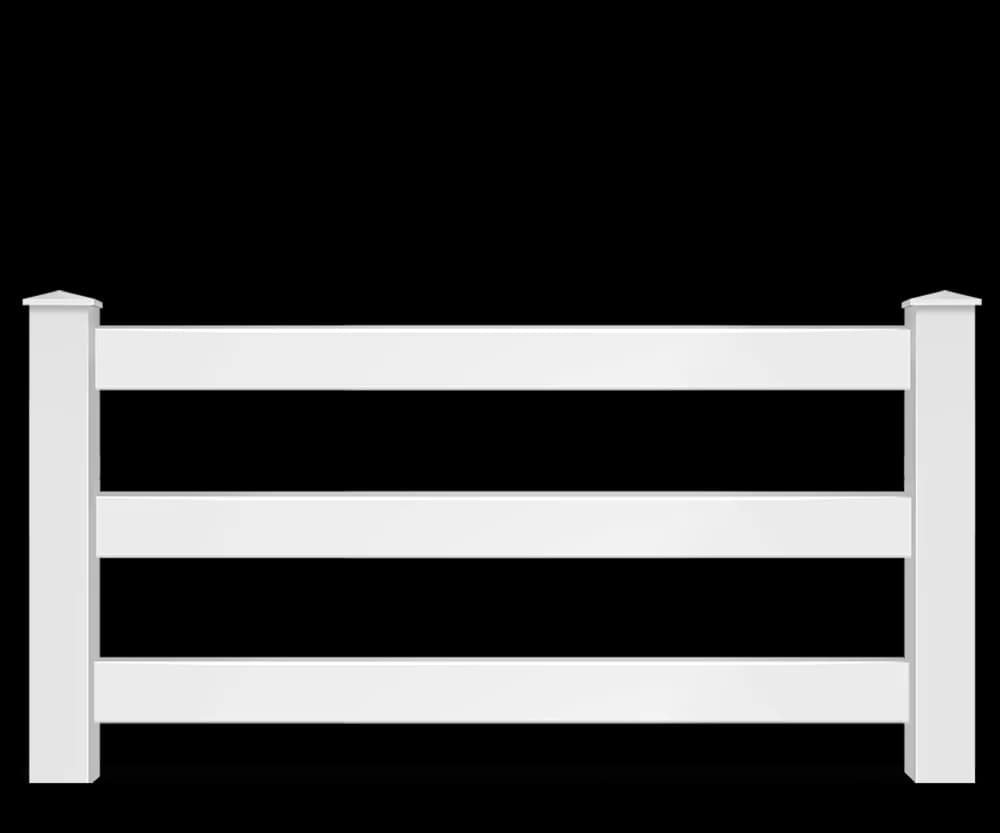
A third rail adds height and containment, and welded wire mesh can be added behind it when you need to keep dogs or livestock inside the line.
Best for: Pastures, paddocks, and acreage
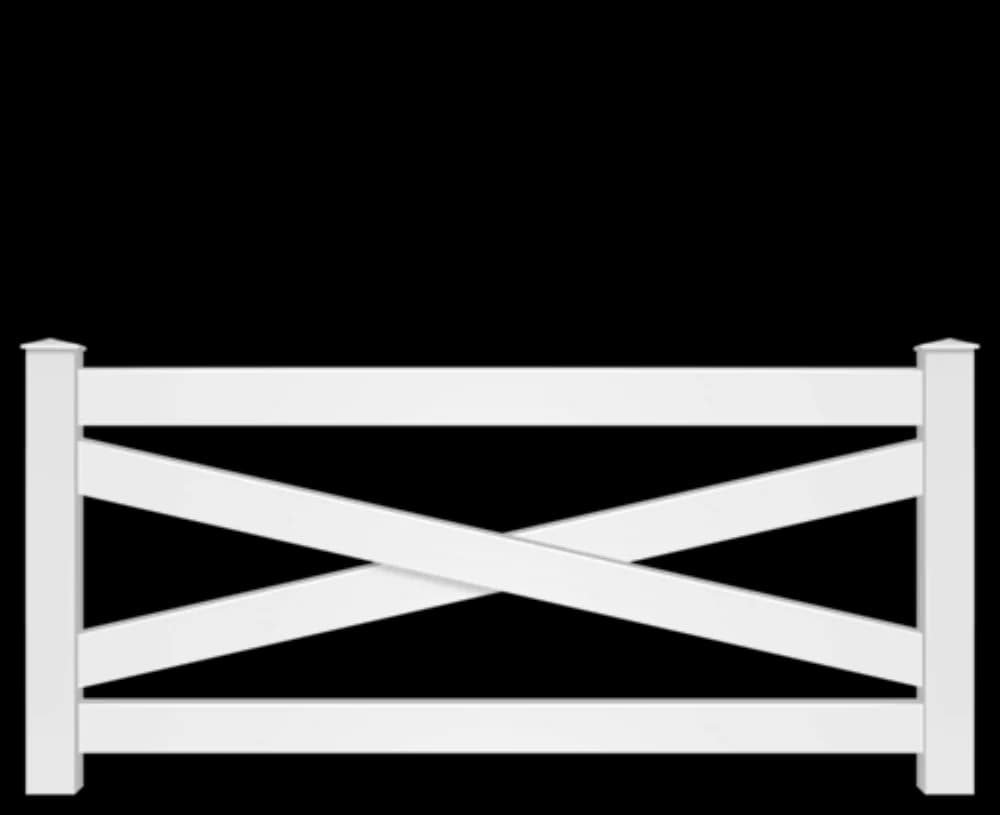
Diagonal rails cross between the horizontals for the classic farm look, giving a long run of fence real character where it faces the road.
Best for: Horse farms and road-facing frontage
Wood costs less per foot and gives you the widest range of designs — 18 styles, from stockade and shadowbox to herringbone and split rail.
Vinyl panels come in fixed manufactured heights, so we plan the layout around your grade and confirm city, county, and HOA limits before the order goes in.
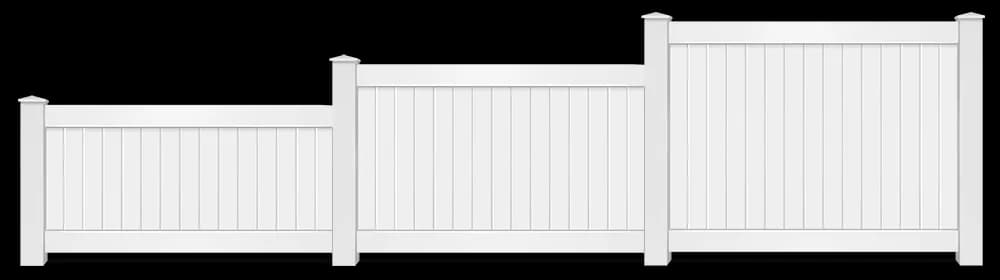
Picket & Rail
Front yards, garden borders, and driveway lines. Closed picket at this height keeps small dogs contained while the yard still looks open.
Semi-Private
Screens most of a side yard and clears many pool-code and HOA requirements without walling the property off from the street.
Full Privacy
Six-foot panels are the Upstate backyard standard. Eight-foot vinyl is available for sloped lots and commercial sites that need more screening.
Vinyl fences fail at the posts and the gates, not in the middle of a panel. This is where we spend the extra money on your project.
A galvanized steel post is set inside the vinyl post and anchored in concrete 2 to 3 feet deep. Vinyl alone flexes in wind and in shifting Upstate clay; the steel insert is what keeps a long run of fence dead straight.
We use thicker-wall extrusions with UV inhibitors rather than the thin big-box panels. They resist cracking in cold snaps, hold their shape in July heat, and do not yellow after a couple of Carolina summers.
Rails are routed straight through the posts instead of being screwed to the face, so the load transfers into the post and there is no visible hardware to rust or work loose along the fence line.
Gates are built on aluminum-reinforced frames with self-closing hinges and a latch rated for pool code where it applies. That is what stops a vinyl gate from sagging out of square in its second year.
This is the difference between a vinyl fence that stays straight and one that starts leaning after a couple of storms. Look at any cut-open post on one of our jobs and you will find steel inside it.
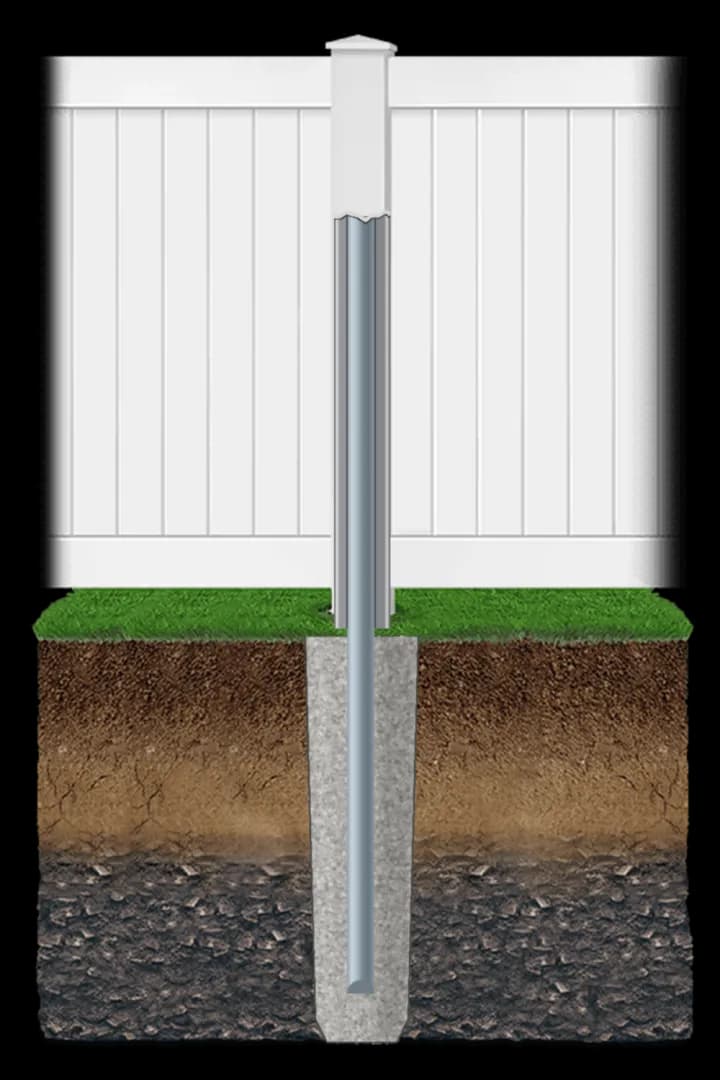
The heavy-wall vinyl post you see from the yard. It carries the panels, holds the cap, and never needs paint — but on its own it flexes under wind load.
A galvanized steel post runs the full height inside the sleeve and down into the ground. It takes the wind and gate loads the vinyl cannot, and it is completely hidden once the cap goes on.
The steel is set 2 to 3 feet deep in a concrete footing, below the frost line and deep enough to hold in Upstate clay, so the post does not shift as the ground moves through the seasons.
Gate posts and end posts take the most abuse on any fence. Steel-reinforced posts are standard on every vinyl job we install, not an upgrade we quote separately.
Vinyl costs more up front than wood. What you buy with that difference is a fence you never have to work on again.
Vinyl never needs a coat of anything. Pollen, red clay dust, and mildew rinse off with a garden hose and mild soap, and the fence looks the same in year ten as it did on the day we installed it.
UV inhibitors in the extrusion keep the color from chalking or yellowing in full South Carolina sun, and vinyl does not rot, swell, or feed termites the way an untreated board eventually will.
No splinters, no nails backing out, no sharp edges. Vinyl is a smooth, solid barrier for a pool area or a backyard where children and dogs are outside every day.
What Greenville and Spartanburg homeowners ask us most before choosing vinyl over wood.
Tell us the style, the yard, and the height — we will measure your property line and give you an exact price at no cost.